Aluminium-frame awnings: which to choose? Benefits, materials and what to consider
- Posted 1 month ago by roovtect
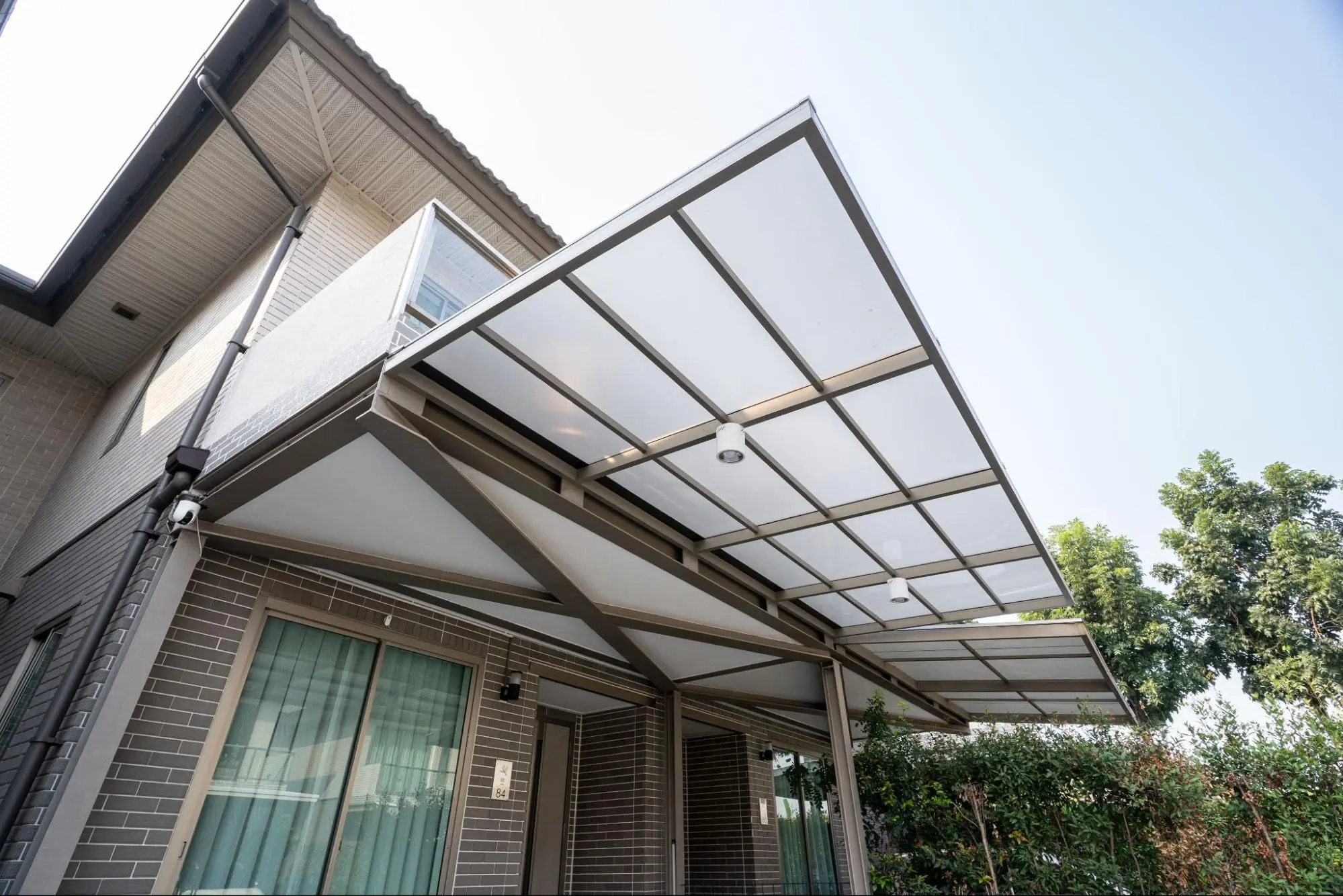
When the sun makes the front of the house hot, or rain stops you using the balcony and carport fully, an aluminium-frame awning adds usable space to the home and deals with both sun and rain. Its strengths are light weight, no rust and design to suit many styles of home
But an aluminium awning roof that suits the house should not be chosen on looks alone, because the roof sheet, form of structure, sun and rain direction and installation area all affect how it works. This article covers the benefits and limits of aluminium-frame awnings and how to choose one to suit the house
Key Takeaway
- An aluminium-frame awning is lightweight and rust-free, suited to extensions outside the house
- An aluminium frame can be used with several types of roofing: acrylic, polycarbonate, vinyl, metal sheet and safety glass
- Choose the roof sheet by amount of light, heat, rain noise and the form of the house
- An aluminium awning structure must be designed to suit the size of the area, the weight of the roof sheet and the actual forces
- Good design and installation consider Design + Engineering + Function, so the awning looks right on the house and works properly
Contents
- What is an aluminium-frame awning?
- What are the benefits of an aluminium-frame awning?
- What are the limits of an aluminium-frame awning?
- What roof sheet materials are there for aluminium-frame awnings?
- How do you choose an aluminium-frame awning to suit the house?
- How should the area be prepared before installing an aluminium-frame awning?
- How do you maintain an aluminium-frame awning so it lasts?
- Aluminium-frame awnings designed to suit your home and use, with ROOVTECT
- Frequently Asked Questions (FAQ)
What is an aluminium-frame awning?
An aluminium-frame awning uses aluminium as the main structural material, with roof sheet fitted on top to keep off sun and rain. It is popular for the front of the house, balconies, carports and aluminium louvred awnings, and as aluminium window awnings, as suits the space
The strength of aluminium is that it is lightweight and does not itself rust, so it suits outdoor work. Aluminium awnings can also be shaped and used with several types of roof sheet, so the design can be adapted to many kinds of house architecture
For homeowners planning ahome extensions the choice of structure should be considered together with the roofing and the nature of the space, so design and use go together
What are the benefits of an aluminium-frame awning?
An aluminium-frame awning is a good choice for outdoor extensions, with strengths in material properties, maintenance and design flexibility. The main benefits are as follows
- Lightweight: Aluminium is fairly lightweight, reducing the load on the structure compared with some materials
- Corrosion-resistant: Aluminium does not rust in the way steel does and resists corrosion
- Easy to maintain: No worry about rust as with a steel frame, so there are fewer maintenance steps
- Modern design: The lines of an aluminium frame look clean and suit Modern or Minimal homes well
- A wide choice of roof sheet: Takes both translucent and opaque materials, chosen to suit light, heat and use
- Usable in many areas: Can be designed as a window awning, balcony cover, side area or carport roof, as appropriate
With these properties, an aluminium-frame awning delivers on both function and design, with details adapted to the space and form of each house
What are the limits of an aluminium-frame awning?
Although an aluminium-frame awning is lightweight, rust-free and flexible in design, it has limits to consider before installation, especially structure, budget and suitability for the space, as follows
- The structure must be designed properly: Section sizes, post spacing and beam spacing must relate to the size of the area and the weight of the roofing
- Cost varies with specification: The price depends on the grade of aluminium, form of structure, size of area and type of roof sheet chosen
- Large areas need careful calculation: Especially awnings with wide spans or no posts, where load-bearing and fixings must be designed properly
- Quality depends on installation: Joints, fixings, slope and drainage must be installed properly, to reduce problems later
Whether you choose a ready-made aluminium awning or a design specific to the space, consider the size, structure, roofing and form of installation to suit the site, so it works for both design and use
What roof sheet materials are there for aluminium-frame awnings?
Each type of roofing for an aluminium-frame awning has different strengths in translucency, heat protection, weight and design, so choose to suit the space and type of use. The popular materials are as follows
Shinkolite acrylic sheets
Shinkolite acrylic sheet is translucent, with a beauty like glass, so the space under the awning still gets natural light and does not feel too closed in. It suits front awnings, balconies or carports, with colour and light level chosen to suit the sun direction and the design of the house
polycarbonate sheet
Polycarbonate sheet is lightweight and comes in translucent versions and several shades, so it suits awnings that want natural brightness and design flexibility. Consider the thickness, colour and properties of the sheet to match the installation area and use
Vinyl sheet
Vinyl sheet is an opaque material, suited to areas that want shade and less direct sunlight. It is also a choice for areas where reducing rain noise matters, such as a carport or a relaxation area beside the house
Safety glass
Safety glass gives openness and a sleek, luxurious look, suited to Modern homes or areas that want natural light and to keep the building open. Glass is fairly heavy, however, so the aluminium awning frame, fixings and supporting structure should be designed in relation to the weight of the material, to suit use in each space
Metal sheet
Metal sheet is an opaque material that is not heavy and can be colour-matched to the house. It suits areas that want shelter from sun and rain without a focus on natural light. If heat or rain noise is a concern, consider an insulated version as appropriate
How do you choose an aluminium-frame awning to suit the house?
Choosing an aluminium awning roof should consider the form of the house, usable space and surroundings, so the awning works for both design and real use. The key factors are as follows
- Consider the installation area: Choose the form and size of awning to suit the location, such as the front of the house, a window, balcony or carport
- Look at sun and rain direction: Areas that take a lot of sun or rain should have a projection and roofing that protect the space properly
- Choose the roof sheet: Consider translucency, heat reduction, weight and maintenance to match the use
- Design to suit the house: The colour, shape and lines of the aluminium frame should match the architectural style of the house
- Consider structure and installation: Frame sizes, fixings, slope and drainage should be designed to suit the actual site
- Consider the budget: Compare materials, structure and installation details, for an awning that fits your budget and needs
Choosing an aluminium-frame awning should give weight to design, function and structure together, so the awning suits the house, works as you need and suits the site in the long term
ROOVTECT offers full awning design and installation, with a team of architects and engineers. See more of our services at: Opaque and Translucent Awning Installation: Good Quality, Beautiful Design | ROOVTECT
How should the area be prepared before installing an aluminium-frame awning?
Before installing an aluminium-frame awning, survey the actual site and plan the details properly from the start, because the size of the area, the existing structure and sun and rain direction all affect the form of awning and its installation. The main points to consider are as follows
- Measure the installation area: Check the width, length and projection wanted, to size the awning to suit the space
- Check the existing structure: Especially for post-free awnings, consider whether the wall or area the structure fixes to can support that form of installation
- Look at sun and rain direction: to set the projection and slope and choose roof sheet to suit the site
- Position the drainage: Set the gutter position and drainage direction at the design stage, to reduce water running or splashing where it is not wanted
- Survey obstructions: such as air conditioners, pipes, cables, doors or windows, so it can be designed and installed without affecting existing use
How do you maintain an aluminium-frame awning so it lasts?
Although aluminium does not itself rust and is easy to maintain, an aluminium-frame awning should still be checked and cleaned periodically, especially the roof sheet, gutters and fixings
- Clean the roof sheet: Remove dust, leaves and dirt as needed, using a cleaning method suited to each type of roof sheet
- Look after the gutter: Do not let leaves or dirt build up and block the flow, as water may not drain properly
- Check fixings and joints: Look for faults such as loose fixings, deteriorated joints or leaks, and fix them when found
- Check after severe weather: After a storm or strong wind, check the roof sheet, structure and fixings for anything out of the ordinary
Regular care keeps the awning in working condition and lets faults be found early, before they become problems that affect other parts of the house
Aluminium-frame awnings designed to suit your home and use, with ROOVTECT
Choosing an aluminium-frame awning should not consider design alone. Look at the form of the house, usable space, roof sheet, sun and rain direction and suitability of the structure together, for an aluminium awning roof that blends beautifully with the house and works for real use in the long term
ROOVTECT designs and installs Tailor Made roofs, awnings and extensions, giving weight to Design, Function and Engineering, selecting standard-compliant materials and looking after the work from design to installation with architects and engineers, plus after-sales service and a 5-year structural warranty and 2-year warranty on fittings, so the work suits the space and needs of each home
For more information call 02-096-3464 or LINE: @roovtect
Frequently Asked Questions (FAQ)
How many forms of aluminium-frame awning are there?
An aluminium-frame awning can be designed in several forms to suit the space and use, such as with supporting posts, without posts or combined with louvres. Choose a form to suit the existing structure and style of the house
Does an aluminium-frame awning block heat?
An aluminium-frame awning reduces the sunlight falling directly on the space. How well it reduces heat depends on the roof sheet chosen, such as opaque sheet or sheet with heat-reducing properties, and on the sun direction and design of the awning
Which homes does a post-free aluminium-frame awning suit?
It suits homes that want the space below clear, fewer posts in the way and a clean-looking design. Check, however, that the existing structure and fixings can properly carry the weight and forces from the awning
How much does an aluminium-frame awning cost?
Aluminium awning prices vary with the size of the area, form of structure, grade of aluminium, type of roof sheet and installation details. So survey the site and set the specification before estimating, for a budget that matches the real site
Does installing an aluminium-frame awning need a permit?
If the installation counts as construction or alteration of a building, such as adding posts, fixing to the existing structure or roofing over a large area, it may need a permit from the local authority under the Building Control Act B.E. 2522, under which adding to, reducing or enlarging the character, extent, form, weight or area of a building structure may be treated as a building alteration
ROOVTECT
Front roof extensions, carport roofs and awning installation at quality prices from ROOVTECT, a group of new-generation architects who came together to take the steel industry a step further, blending modern, distinctive design with advanced technology to make roofs and awnings perform better