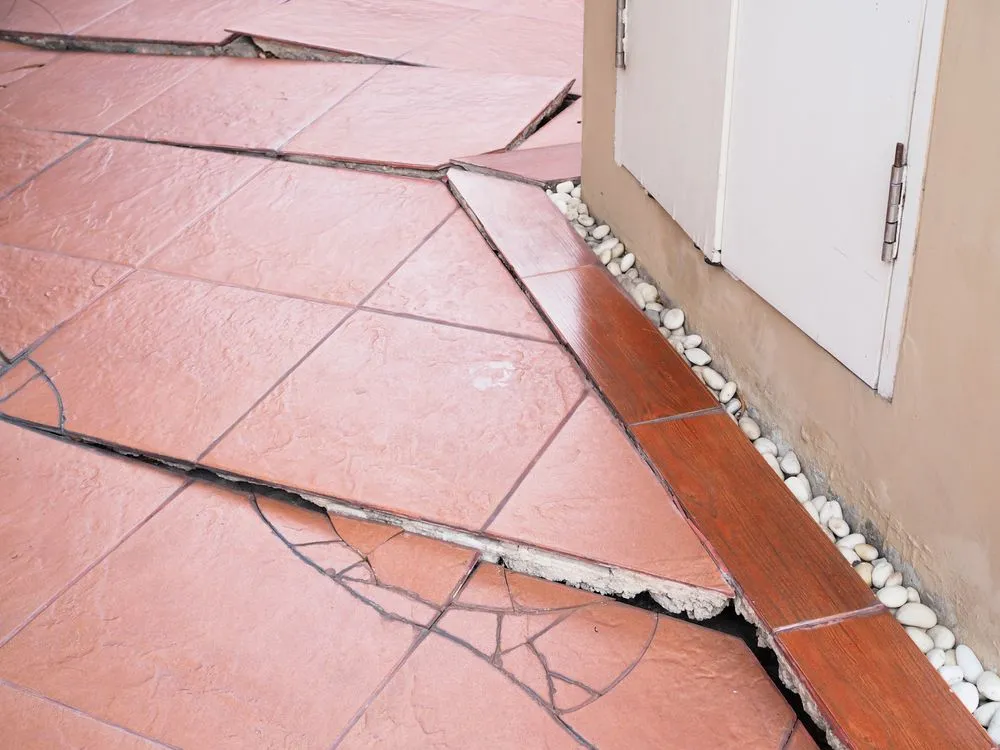
A settling house or sinking floor is something many homeowners may face, especially as the house ages or is extended without regard for the stability of the existing structure, which may make the house settle until it becomes dangerous. If you are a homeowner worried about this, or considering an extension, knowing the warning signs, the causes of settlement and the right way to fix it will help you plan prevention and deal with it effectively
3 warning signs that a house is at risk of settling
House settlement is mostly a chronic problem, not something that happens at once, but the result of settling little by little. So what homeowners can do to stop a sinking floor from affecting the structure and living is to watch for small warning signs and fix problems early. The common warning signs are
1. Cracks in walls and ceilings
Cracks in walls and ceilings, especially where wall corners meet the ceiling or near doors and windows, are a warning sign of movement in the house structure, which may be caused by settlement of the floor or foundations
2. Doors and windows that do not close fully
If doors and windows that used to open and close easily start not closing fully or become harder to open, there is a risk that the house structure is moving, which may be the result of uneven settlement of the floor
3. Uneven floors
Houses with settlement problems mostly have uneven floors, a hollow sound underfoot, cracked floor tiles or clearly visible dips. This sign may come directly from settlement of the foundation structure
Common causes of sinking floors
Every problem has a cause, and house settlement is no exception. It mostly comes from several factors together, especially these key ones
- Poor foundation design or unstable construction especially for houses built on soft ground
- A house that is not looked after regularly such as repairing cracks or checking the condition of the house structure regularly
- Extending the house without regard for the existing structure such as adding upper-floor area or building an extension that is too heavy, so the structure cannot carry the load
- Changes in the surroundings whether excavation near the house or changes in the groundwater level, as well as natural disasters such as earthquakes, floods and storms

How to fix house settlement effectively
If you find your house is settling, do not panic about whether it will collapse, because there are fixes that end the worry effectively and safely, as follows
1. Check the foundations to find the cause of settlement
The foundations carry the whole weight of the house and keep the structure stable. If the house is settling, have a specialist engineer inspect cracks in the foundation area and check ground settlement, to find the right foundation repair
2. Repair cracks in walls
Cracks in walls are one of the warning signs of settlement. As a first step they can be repaired as follows
- Clean dust and debris out of the crack
- Use a suitable crack repair material, such as silicone sealant or cement, fill the crack and smooth it level
- Once the repair material is dry, repaint the wall so it looks neat and attractive again
3. Re-level the floor
Where the floor has sunk because of ground settlement or a fault in the floor structure, it must be re-levelled by specialists, to prevent further movement or damage. The engineer starts by checking different areas of the floor to assess the degree of settlement, then the floor is levelled and covered with flooring
4. Check and improve the drainage system
Poor drainage keeps the soil around the foundations constantly wet Over the long term, this may lead to settlement of the house. If you find a problem, check whether the drains are blocked, have damaged pipes repaired, redesign the drainage and make sure rainwater runs into the drains well with no standing water around the foundations, to prevent the problem recurring
The 4 methods above are the generally used approaches to fixing house settlement. Which to use starts with assessing the problem. Consult a professional engineer to find the right repair method, so the house returns to good condition and is safe to live in for the long term
How to prevent house settlement
Besides dealing with it the right way, another thing every homeowner can do from today is prevention and making the house stable from the foundations up, following these guidelines
- Choose strong, durable home extension materials suited to the type of use and the surroundings. For example, a Shinkolite roof for an extension is not only beautiful but has installation standards that effectively reduce the risk of settlement
- Design a strong house structure Use high-quality materials and a specialist engineer to calculate and design foundations that carry the load well and allow for ground movement that may change over time
- Check and repair cracks regularly in both walls and floors, because prompt repair stops the problem spreading into severe settlement later
- Lay out good drainage and install waterproofing to prevent standing water, so rainwater or damp does not attack the structure and floor until the house settles
Extending a house with confidence, and preventing sinking floors for good, starts with good planning and quality materials. If you want a roof extension without the headache of settlement later, choose a standard-compliant translucent acrylic roof installation service. At ROOVTECT we are ready to provideShinkolite roof installation with design by professional architects and engineers, so you can be confident in the quality, strength and safety of every extension. Warranty of up to 10 years. For more information, call 02-096-3464 or LINE: @roovtect
References
How to check for house settlement yourself. Retrieved 15 May 2025 from https://siamengineergroup.com/วิธีการตรวจสอบบ้านทรุด/