An awning is an important part of a house that adds sheltered living space and protects the area from the weather, whether sun, wind or rain, making the house more complete. It also adds value if you sell. Choosing the right awning is therefore something homeowners should weigh carefully, especially when deciding between an awning with posts and a post-free awning, because the two types differ clearly in character and benefits
Awnings with posts: strong, durable, plenty of usable space
An awning with posts is an awning supported by steel posts that carry the weight of the roof. The posts are generally placed at the corners or sides of the awning, and their size depends mainly on the size of the roof and the usable space below
Benefits of awnings with posts
- Strong and durable, and carries weight well Withstands many kinds of harsh weather, whether strong wind or heavy rain, and protects the area from direct sun
- Support posts let you make full use of the space under the awning so it suits areas used for other activities, such as parking or a seating area
- An awning with posts is usually easier to install than one without because the posts add stability, making installation straightforward
Limitations of awnings with posts
- Affects the overall look of the area because posts may block the view and limit the design
- In some cases, posts carrying the weight of the awning need piling for added stability, which raises the cost
- Takes longer to build, because the ground must be drilled for posts and piles which makes the area inconvenient to use during construction, in the case of concrete piling
Post-free front awnings: quick to install, lower cost
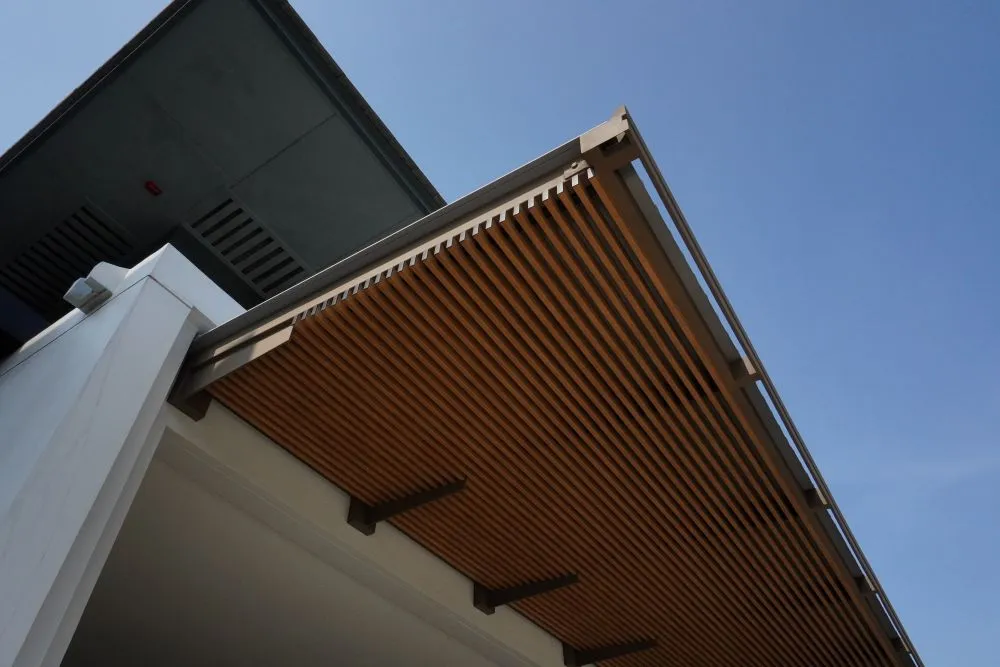
Post-Free Awnings Also called a bracket awning, this is an awning installed with no support posts, using steel arms or a structure fixed to the wall at a 45-degree angle to carry the weight of the awning roof. This kind of installation keeps the space open and looks more modern
Benefits of post-free awnings
- A post-free awning cuts installation costs because there is no material cost for posts and piling
- This type of awning uses a structure fixed directly to the house with no time spent on foundations or setting posts, so installation is quicker and easier
- The design keeps the house open and airy, with no posts in view Suits homes that want a modern look and want to show off the house to the full
- Reduces house settlement problems because no piling is needed and no weight is added at new points that could affect the main structure of the house
Limitations of post-free awnings
- The strength of this type of awning depends on the durability of the wall or structural beam carrying the load. If it is not strong enough, the house structure may be damaged
- Limited in the area it can cover because it relies on the main structure of the house to carry the load, so it cannot support a large awning

Criteria for choosing: awning with posts or without?
If you want to extend your home and are not sure whether it suits an awning or roof with or without posts, weigh these key criteria together
1. Have an engineer assess the building structure
The most important consideration is to have an engineer assess the existing building structure where the awning will go, to see how much load it can carry, so the installation method and awning materials can be chosen to match
2. Consider the columns or beams where it will be installed
Where aawning is to be installedwithout posts, the building structure must be reinforced concrete columns or beams with a suitable amount of reinforcement, to prevent damage to the house structure and danger to residents
3. Load-bearing capacity of the house
For a sun awning or front roof without posts, you must be sure the house wall can carry the weight of the awning without damaging the structure. Check the strength of the wall and foundations thoroughly to avoid settlement later
4. How you will use it and the space you need
Choosing between posts and no posts depends on use and the size of the area. If you want an open space with an unobstructed view, choose a post-free awning. If you want durability and high load capacity for a large usable area, an awning with posts is the better fit
5. Budget
Budget is a key factor in choosing materials and installation method. On a limited budget you may need a post-free awning, which costs less because no piling is needed, with durable but economical materials, such as a steel frame or materials that block water and heat at a fair price, for a result that is good value and lasts
6. Looks and design
Finally, the design and style of the awning must match the decorating style of the house and its surroundings, so the awning not only blocks sun and rain but also adds beauty and identity to the home
Before extending your home and installing an awning, always consider strength, durability and looks for long-term use together. If you are planning a sun awning or front roof, with or without posts, talk to the expert architects and engineers at ROOVTECT. We offerawning installationas a full service, using high-quality materials and modern design, with a 5-year structural warranty, a 2-year warranty on awning components (covering leaks and structural paint) and a manufacturer's roofing material warranty of up to 10 years. To consult and design an awning that suits your use, call 02-096-3464 or LINE: @roovtect
References
- Tips for choosing a good awning that stands up to sun and rain. Retrieved 27 May 2025 from https://www.ddproperty.com/ข่าวอสังหาริมทรัพย์-บทความ/2017/7/156187/เทคนิคเลือกกันสาดให้ดี