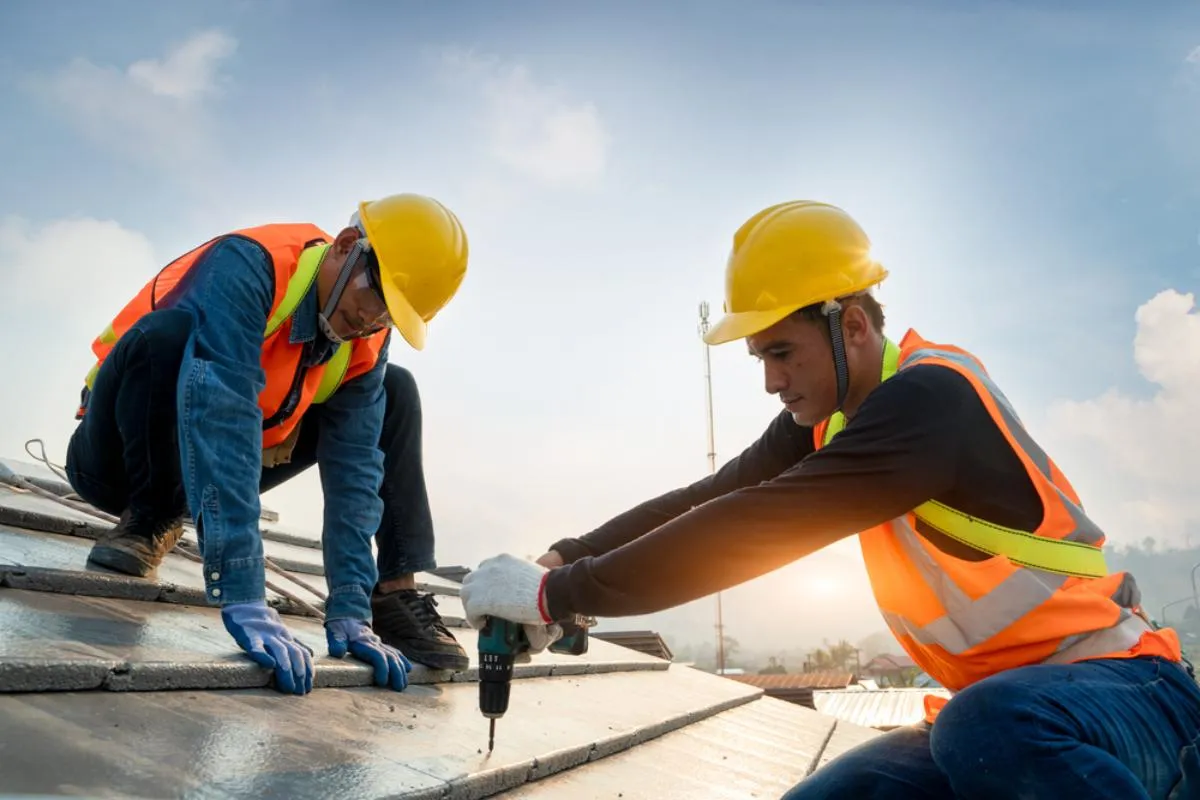
Factory roof damage does not usually happen suddenly but starts from cumulative factors such as rain leaks, material distortion, weather erosion, age-related cracks and chemical corrosion, all of which make a factory roof deteriorate more and more. The key warning signs are bowed roof sheets, rust holes, loose joints and screws, blocked gutters and water-stained ceilings. If operators understand these causes and signs and inspect systematically, they can decide properly whether to repair or replace the roof, reducing the risk of production stoppages and machinery damage and saving long-term costs effectively
Inspecting and maintaining the factory roof is important for smooth operations, because a damaged or deteriorated factory roof can affect employee safety as well as work and production. Knowing the warning signs and deciding whether to repair or replace the roof saves time and long-term costs
5 key factors that damage factory roofs
The factory roof is one of the hardest-working structures of a building, facing sun, rain, heat, damp and the factory's own particular environment all year round. Over time it will show signs of damage little by little, mostly from these factors
1. Rain leaks
Most problems start with water getting in, seeping through joints, roof sheets, ridges, hips or lines of screws. Repeated seepage sets off a cycle of damage: damp insulation, rust under the sheets and a deteriorating structure. At worst the roof can collapse
2. Distortion or sagging of materials
Roof sheets or purlins weakened by age, overloading or unsuitable purlin spacing may sag, bow or twist, opening gaps at joints and fixing points and making the roof leak more easily
3. Weather erosion
Strong sun, heavy rain, high humidity, strong wind and daily temperature swings make materials expand and contract, affecting roof sheets, screws, seals and joints. Near the sea or in dusty areas, coatings degrade faster, so the chance of rust and leaks is higher too
4. Cracks and welds
A factory roof in long use may crack along the sheets or at structural welds. Some factories also have additions that pass through the roof to install equipment, increasing the risk of cracks
5. Chemical corrosion
Many factories have chemical fumes or dust, such as acids, alkalis, cleaning agents and process smoke, which speed up corrosion of metal surfaces and degrade coatings faster. Choose highly durable roofing suited to the environment to extend service life
Signs of factory roof damage to watch for and repair
Look for signs of roof damage both from above and inside the building, because even if the roofing looks sound from above, damp may already be building up inside. The signs to watch especially are
Roof sheets that bow, twist or sag
A sign that the load-bearing structure has a problem, seen in uneven sheet lines, distorted ridges or puddles on the roof after rain. Left alone, it risks sagging further or coming loose in strong wind
Tiles or roofing that are cracked or rusted through
Common in sheets used beyond the life the manufacturer recommends, leading to rust, holes or cracks that let rain through easily. If rust spots are spreading in many places, it is usually a sign that a full repair is needed urgently
Loose joints and screws
Screw points are among the most common leak points. When the washers age, screws loosen or seals craze, water seeps along the threads. That is why fixing points and seals should be checked thoroughly before accepting roof work from a contractor
Blocked rain gutters
Sediment, leaves, dust and built-up debris are the main reasons water cannot drain fast enough, so it overflows into joints or backs up under the sheets, raising the risk of rust and pooling that damage the roof over time
Discoloured or water-stained ceilings
A sign of roof damage showing that the inside of the roof has a problem, even if no leak is visible from above. If the ceiling is discoloured, stained, spotted or bulging, water is leaking steadily under the roof. Fix it quickly before the damage spreads
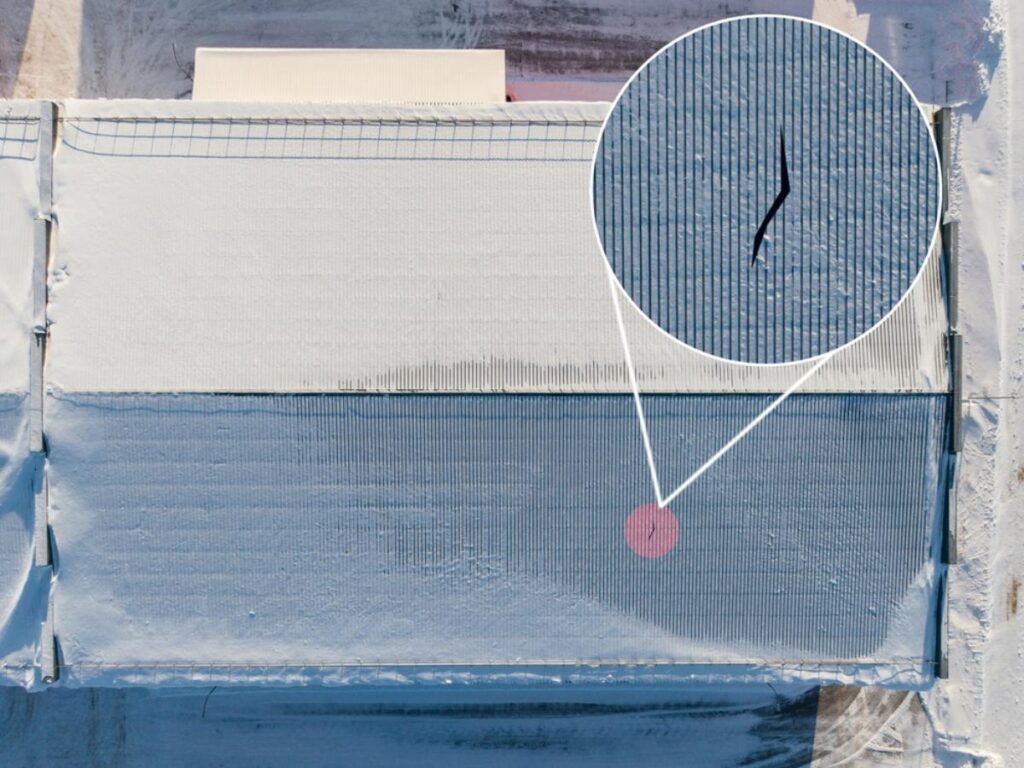
A deteriorated factory roof: repair or replace?
The key to deciding whether to repair or replace a deteriorated factory roof is working out whether the damage is a local problem or a system-wide one, because spot repair is worthwhile and effective only when the material as a whole is still sound and the roof structure is undamaged
When spot repair is possible
- Small cracks or leaks at just a few points can be fixed at the source of the crack, perhaps by replacing the sheet there or sealing the leak with a suitable material, then testing again for leaks
- Degraded screw seals or loose joints with sheets still intact: replace the washers or re-fix the screws and seal correctly, to reduce the risk of repeat leaks
When the whole roof system should be replaced
- Rust and decayed sheets at many points show the roof is deteriorating as a whole. Spot repairs rarely end the problem; assessing replacement by zone or in full gives better value
- Bowed or sagging sheets are a direct structural problem that must be inspected by an engineer, and usually call for a new, safer roof design
- Old age and repeated leaks show the system as a whole is beyond repair. Plan replacement for safety and to prevent accidents at work
How to check for factory roof deterioration yourself and prevent long-term damage
Do not wait until factory roof damage is out of control. Check the roof regularly along these lines to reduce risk and emergency costs effectively
- Check the roof sheets: look for bowing, rust, holes and joints, focusing on ridges and junctions between levels. If you find damage, map the leak positions to see whether they recur in the same place or are spreading
- Check inside the building: inspect ceilings, walls and steel structure during or after rain for water stains, musty smells and signs of damp
- Check the drainage: check gutters, pipes and slopes to prevent pooling and backflow, and clear sediment and debris regularly, because a blocked gutter can overflow back and speed up the deterioration of joints
For operators who want afactory roof extensionor building roof that is reliable, strong and durable with no worries about leaks, ROOVTECT designs and installs roofs with expert engineers and architects, so you get a roof suited to its use, with a standard-compliant warranty on construction quality and structure
Request a quotationthrough the website. For more information or a consultation on a factory roof extension, call ROOVTECT on 02-096-3464 or LINE: @roovtect
References
NRCA Manual of Roof Inspections. Retrieved 6 January 2026 from [https://www.scribd.com/document/720727570/NRCA-Manual-of-Roof-Inspections]
Frequently asked questions about factory roof damage (FAQs)
Q: How often should a factory roof be checked?
A: In general, check a factory roof at least 1-2 times a year, and more often before the rainy season or after severe weather, even if the factory has no history of roof leaks
Q: Does an engineer need to inspect the factory roof before and after repairs?
A: Very much so, especially where there is bowing or structural distortion, because it directly concerns the safety of the building
Q: If planning to replace a factory roof, where should I start?
A: Start with a site survey and an assessment of the existing structure, to design a new roof system suited to the factory's use and budget over the long term