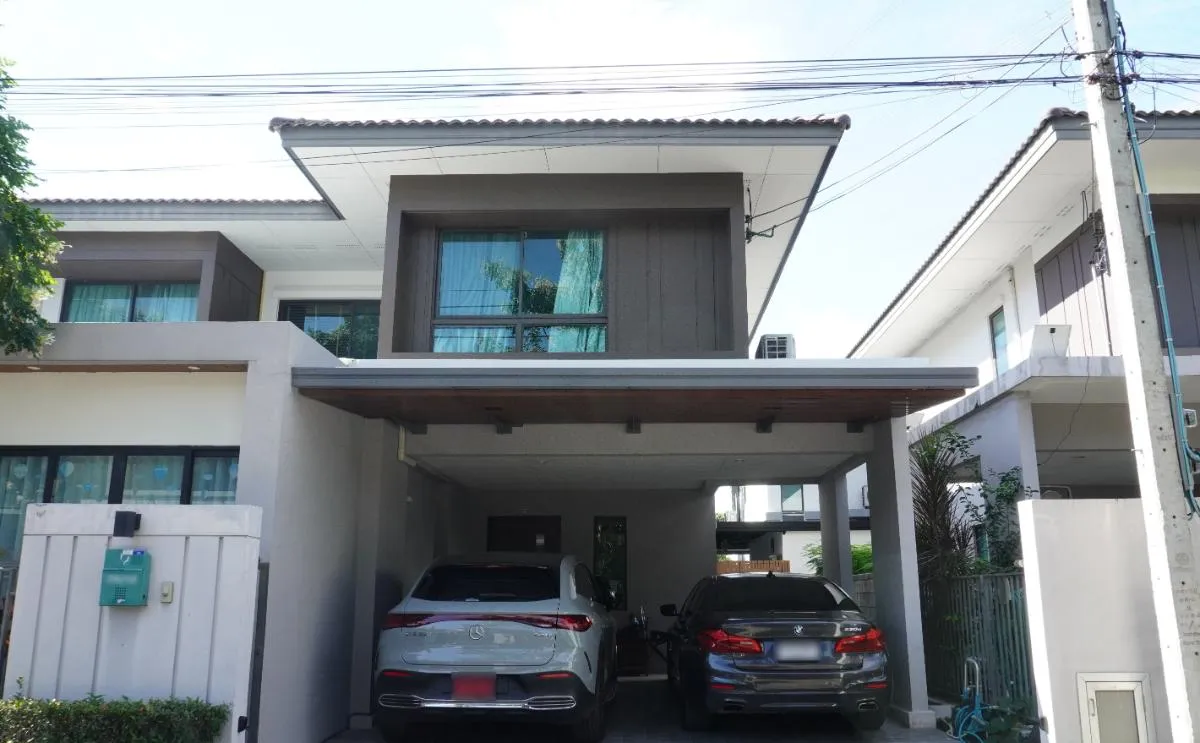
A post-free carport roof adds openness and function to a home, but design alone is not the key. Deciding on this type of roof means weighing the strength of the existing house structure, a suitable projection, material weight, wind load, waterproofing and drainage from every angle, because a post-free roof is a structure loaded from one side. Mistakes in design or construction may lead to sagging, leaks or early deterioration. Planning from the start by a team that understands both structure and real use makes a post-free carport roof or front roof safe and good value for years
The post-free carport roof (Cantilevered Carport) is increasingly popular today, because the design looks open, airy and modern. It not only adds to the look of the house but also saves parking space and does not block the view from outside. However, choosing a carport roof or awning with or without posts is not only a matter of design; safety and the strength of the house structure must also be considered. There are therefore some cautions homeowners need to know before deciding on this type of carport roof
What is a post-free carport roof?
A post-free carport roof is a roof structure designed to carry its load from one side or from the main structure of the house, with no support posts at the front. The parking area is open and convenient, car doors open easily, and the house looks clearly more modern. It suits modern homes that put function and design together
This type of carport roof uses a structure called a Cantilever, which carries the load from one side by fixing to the wall or columns of the existing house, so no posts are needed at the front and far less usable space is obstructed. This makes it ideal for homes that want more parking space with no posts in the way

7 cautions for post-free carport roofs
In every extension, whether a carport roof or a projecting front roof, strength, durability and safety matter most. Before deciding on any extension, always give weight to these 7 cautions
1. The existing house structure must be able to carry it
A post-free carport roof is not just a matter of leaving out the posts. The structure must be calculated precisely using Cantilever Structure principles, for a structure projecting from a fixing point on one side, whether a beam, column or wall of the existing building. Before building, check beams, columns and walls thoroughly for cracks and seepage, to prevent loosening fixings, cracked walls or sagging beams later
2. The roof projection has limits
The projection of a post-free roof must match the thickness and type of steel and the strength of the structure. The further the roof projects, the stronger the structure must be. Thin steel or a light frame as used for ordinary awnings will not do, or the roof may sag and collapse
3. Choosing suitable roofing that withstands severe weather
The key property of roofing for a post-free carport is being light yet weather-resistant, to protect the car from sun, rain and storms, with noise and heat considered too. Recommended materials are
- Shinkolite: a translucent material with good impact resistance and UV protection
- Solid Sheet, or solid polycarbonate: a lightweight, tough, strong and translucent roof sheet
- Smart Vinyl: an opaque, highly flexible vinyl sheet that excels at absorbing rain noise
4. Weight and wind load on the roof
A post-free awning takes forces from several directions: the weight of the roof sheets, rain, and wind striking the sheets from below as uplift. The highest-risk points are sheet edges, joint lines and screw fixings, so precise installation deserves special attention
5. The connection to the house must be both firmly fixed and waterproof
This type of carport roof often has problems at the junction with the house wall. If the frame is fixed firmly but water is not managed well, rain may flow back into the wall, causing damp, mould, blistered paint and rusting steel over time. It is best to have flashing over the joint to direct water, a clear line for water to run away from the wall, and standard-compliant waterproofing, not silicone alone, which degrades quickly in sun and rain
6. Roof drainage
However well the roof is designed, if the slope is too shallow, the gutter too small or the pipes badly placed, rain may pool or flow back into joints, especially in heavy rain. A post-free roof that lasts must have a slope suited to the material, a gutter sized to the catchment area and care at gutter ends and pipe connections, which block easily with leaves and dust
7. Choosing a design that suits the house
Finally, a post-free front roof that looks good over time must balance beauty and strength. Do not make the frame thin or project further than the structure can bear for the sake of looks alone. Modern-style homes usually suit straight steel or aluminium frames in plain colours, while tropical homes that want long eaves should have the structure strengthened accordingly, so the roof really works, without sagging, vibrating or problems later
Tips for post-free carport and front roof extensions that last
A post-free carport roof that works well over time starts with planning ahead to keep repairs to a minimum, saving both money and headaches. There are 3 key foundations
Use an extension service overseen by professional engineers and architects
A provider ofroof extension,that is professional and trustworthy starts with a site survey to produce clear drawings, specifying the structure, frame spacing and fixings consistently before work begins, with waterproofing details and drainage in the drawings, not fixed ad hoc after problems arise
Choose materials that block heat and noise well
A carport roof affects the comfort of the whole house, especially heat build-up under the roof and rain noise. If the extension is near a bedroom or living room, or the space under the roof is used often, choose materials that reduce heat and noise well. If you want natural light, use translucent materials with UV protection and design the slope and joints with extra care, for both brightness and durability
Maintain and care for the roof properly
However well a post-free roof is designed, leaving gutters blocked, seals degraded or screws loose without checking can lead to leaks later. Proper care means inspecting the roof at least once a year, focusing on joints, fixing points and drainage, to fix issues early, extend service life and avoid large, unnecessary costs
If you are planning a post-free carport roof, ROOVTECT designs and builds carport roofs with expert architects and engineers, analysing the existing structure, installing roofs in Shinkolite and other suitable materials as a full service, and supervising installation systematically with professional teams, so your carport roof is beautiful, safe and practical over the long term
For information or a consultation on Shinkolite roof extensions at good value, call 02-096-3464 or LINE: @roovtect
References
An Overview of Cantilever Carport Installation Options. Retrieved 6 January 2026 from [https://www.streamx.com.au/an-overview-of-cantilever-carport-installation-options/]
Frequently asked questions about post-free carport roofs (FAQs)
Q: How many years does a post-free carport roof last?
A: Service life depends on materials, structure and maintenance. Designed correctly and maintained regularly, it lasts about as long as an ordinary roof
Q: Does a post-free roof need a building permit?
A: It depends on the size and nature of the extension and the rules of each area. Check with a specialist or the local authority before starting. You can read more in our article summarising home extension law before you begin!
Q: What needs special care for a post-free roof on a home in a heavy-rain area?
A: Give weight to the roof slope, gutter size and downpipe position, to prevent pooling and water flowing back into joints