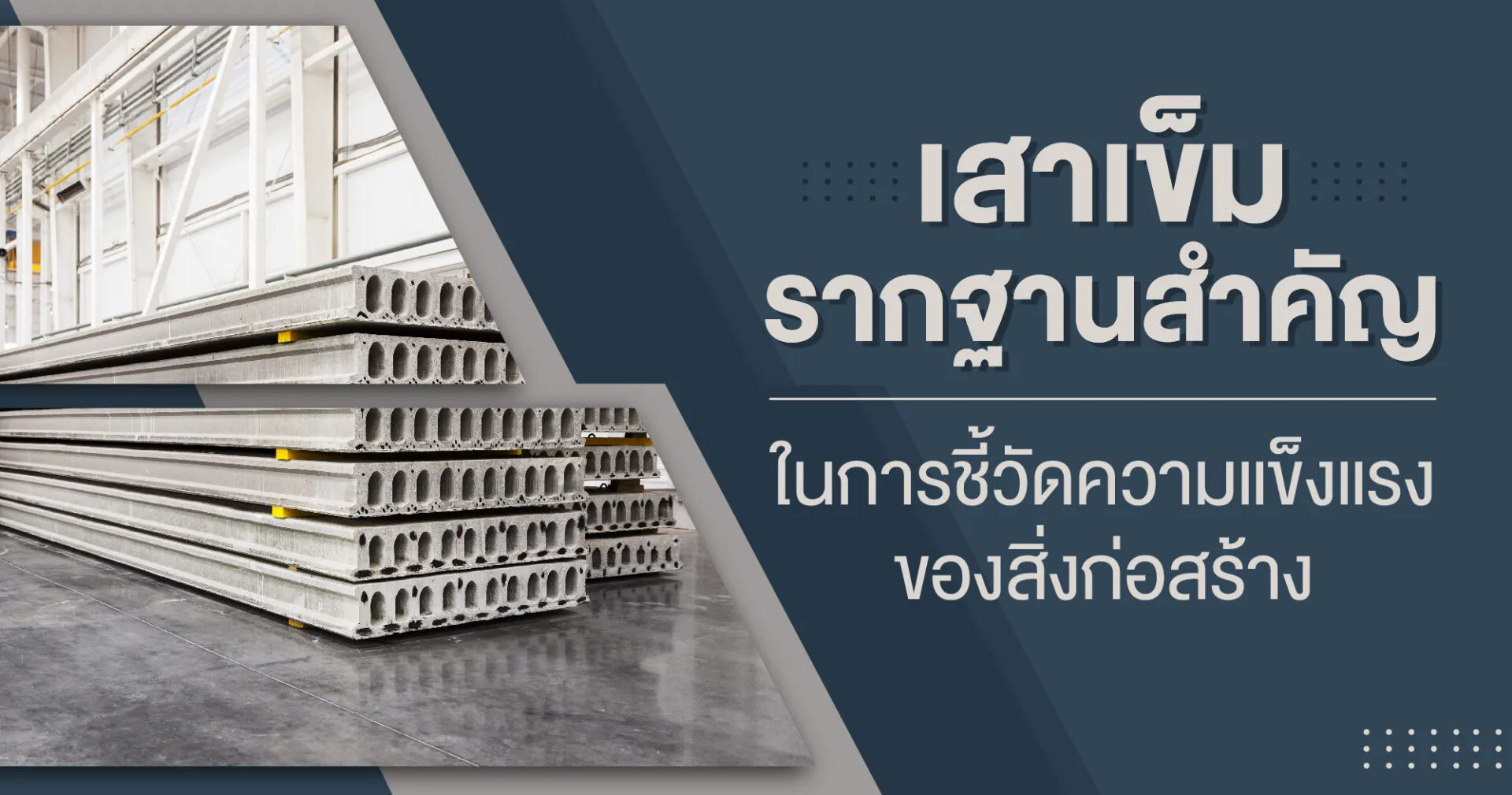
One of the key elements in building a house or building is the pile. It is extremely important, but some people overlook it. Of course we cannot see the piles once a building is finished, but they are the foundation of everything. In this article we get to know piles: how many types there are and what they do
What is a pile?
A pile is a type of building structure buried at the very bottom, one of the most important elements in building a house or building, because without piles a building is likely to settle badly if the ground surface cannot carry the load
What does a pile do, and how important is it?
As mentioned, a house or building without piles may settle. The main job of a pile is to transfer the weight of the house to the ground. Piles carry load in two ways: by friction between the pile surface and the soil (Skin Friction), and at the tip of the pile where it stands on the sand layer (End Bearing). Piles are driven down to the sand layer because it is the layer that carries load best

What types and sizes of pile are there?
There are several types of pile used for houses and buildings, depending on the kind of work, as follows
1. Timber piles
Suited to small, light structures. They are cheap and easy to transport but carry rather little load. Today timber piles are usually pine or eucalyptus
2. Steel piles
Suited to temporary structures that carry heavy loads but are later dismantled, as they are easy to move. Made from solid steel sections, they carry more load than concrete or timber piles, install quickly, make no noise impact and cause little vibration
3. Prestressed concrete piles
These piles are popular for commercial buildings and houses. The concrete is made with rapid-hardening cement and the internal reinforcement is high-strength prestressing wire, which greatly reduces cracking of the pile. Driving is not complicated: the pile is simply hammered into the ground with a piling rig. The widely used concrete piles are I-section piles, solid square piles, T-section piles, often used for fence foundations, and hexagonal or octagonal piles

What sizes do prestressed concrete piles come in?
Generally 12-16 metres; in some areas up to 21 metres may be used, as specified by the design engineer. Generally, a house should be piled down to the hard soil layer, so both kinds of resistance support the house and keep it stable. Before driving is allowed, the piles must be checked for integrity, and once driving is complete, the deviation of the pile centre must be checked. The acceptable value is no more than 5 cm
4. Bored piles
Also called cast-in-place concrete piles, they suit tall buildings carrying heavy loads and buildings built close together, because they carry a large load with little vibration. They cost more than precast concrete piles and involve more steps, which must be done on site: a drilling rig bores the soil to the specified depth, then reinforcement is placed and concrete poured to cast the pile
How many kinds of bored pile are there?There are 2 kinds of bored pile. The dry process suits houses; the piles are 20-30 metres long and carry from 25 tonnes up to about 60 tonnes. The wet process suits large buildings; the piles are from 8 to 60 metres long and carry 150-900 tonnes
5. Prestressed spun concrete piles
Also called spun piles, they suit the foundations of tall buildings that need strength and a high load capacity. They are round, hollow in the middle, with prestressing wire embedded in the concrete all round, which reduces soil pressure during driving. They can be driven with an ordinary piling rig or installed by pre-boring and pressing
What sizes do spun piles come in?The size of spun piles depends on the manufacturer, but most are 20-100 centimetres in diameter, with a concrete wall thickness of 6-14 centimetres. The length can be extended by joining piles together
What sizes do spun piles come in?
The size of spun piles depends on the manufacturer, but most are 20-100 centimetres in diameter, with a concrete wall thickness of 6-14 centimetres. The length can be extended by joining piles together

Piles are a main component of a house or building that cannot be left out, because they are the foundation of the whole structure. Without them, the building is very likely to settle. Today there are several types of pile, whether timber, steel, prestressed concrete, bored or spun, each with different properties depending on the purpose. Besides piles, one of the key elements that completes a house is the roof
If you are looking for a beautifully designed roof that helps keep the house cool, we recommend ROOVTECT. We produce and design awning roofs and carport roofs in acrylic sheet Shinkolite in Knockdown form and vinyl roofsand solid polycarbonate roofs with Knockdown roofs and distinctive design by architects and engineers. For a carport roof extension or installation, ask for details. Add Line