Key takeaway / Summary of topic answer
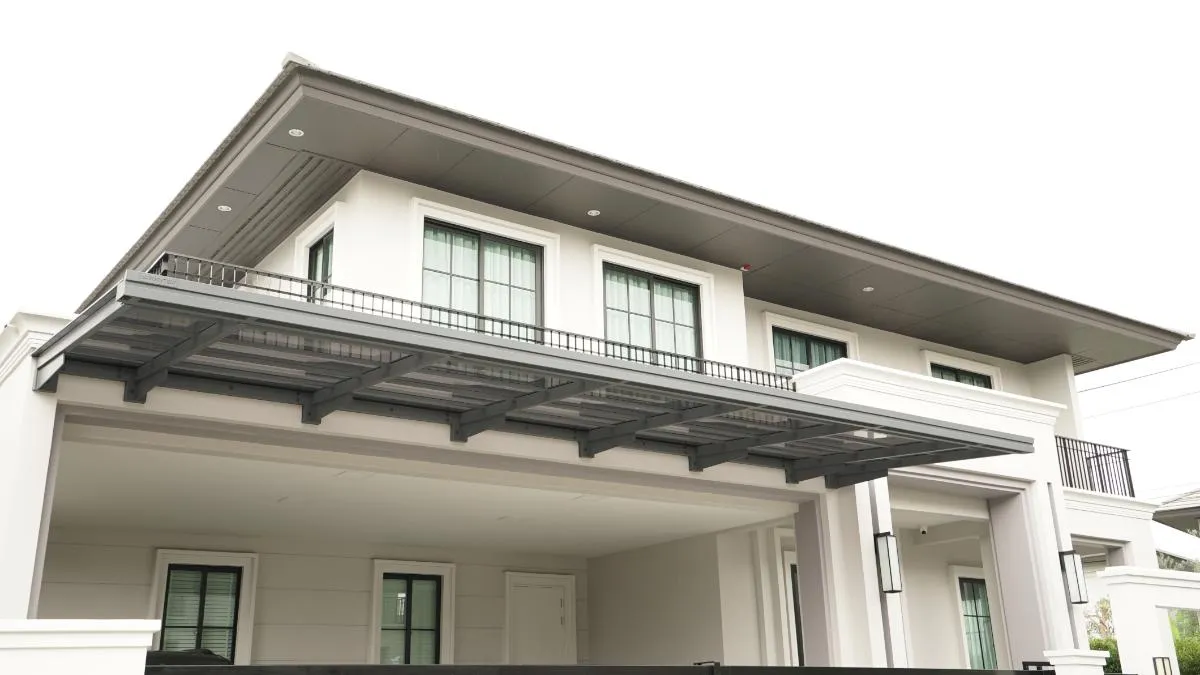
A Contemporary-style home takes Modern simplicity and makes it softer and warmer, with flexible design that is not tied to fixed rules but uses what is current and practical. Its hallmarks are simple lines, warm tones, natural materials and large windows. For a carport roof or front extension that makes a Modern Contemporary House, choose a modern design such as a Flat Roof or Butterfly Roof and materials such as Smart Vinyl or Shinkolite acrylic, with a Slope suited to the material for efficient drainage
The Contemporary-style home is a popular choice at the moment, with design that blends the modern with local materials without the house dating over time. It is flexible in design and suitably warm in feel, so it suits modern families who want a home that is both luxurious and practical for daily life
What is a Contemporary-style home, and what are its hallmarks?
Most people have heard of Contemporary-style homes but are unsure exactly what the style is and how it differs from Modern. In fact, a Contemporary-style home takes modern simplicity and adapts it to be softer and warmer, without being tied to the fixed design rules of any one era, focusing on what is popular now and works in practice
Key hallmarks of Contemporary-style homes
- Simple lines Straight lines and clear geometric shapes, with their hardness softened by materials or tones, so the house is easy on the eye
- Warm Tone Usually clean base colours such as white, grey, cream or light brown, for a relaxed atmosphere
- Natural materials Wood, stone or natural-look substitutes are used in the finishes, for warmth and a link between the house and nature outside
- Large windows Large openings make the house look open and airy and bring in natural light, reducing energy use
The difference between Contemporary and Modern Houses
Although Contemporary and Modern homes are alike in some ways, there are clear differences, as follows
- A Contemporary-style home has flexible design that is not tied to a fixed form, and may use varied materials or elements in line with current trends
- A Modern-style home is more systematic, with straightforward forms and high-tech materials
Roof extensions for Contemporary-style homes
If you are about to extend a carport roof or front roof to match a Contemporary-style home, here are ideas for roof designs, materials and technology
Contemporary roof designs
- Flat Roof A clean, modern design, ideal for homes with simple, straight lines
- Pitched Roof such as a hip or gable roof with a lowered pitch, to look modern while still draining rain well
- Hybrid Roof A combination of flat and pitched roofs, adding visual interest so the house does not look dull
- Butterfly Roof A roof shaped like butterfly wings, a distinctive, modern design
- Balcony and Roof Terrace Turns roof space into a terrace for relaxing, linking Indoor and Outdoor living
Recommended materials for Contemporary roofs
- Steel A popular material for Contemporary-style homes, because it is durable and can be made in many forms
- Solid Polycarbonate A flat, clear sheet like glass but lightweight and tough, with excellent impact resistance
- Smart Vinyl A popular material that reduces rain noise, highly flexible and attractive in a modern way
- Shinkolite acrylic) Premium and translucent, with excellent heat protection
New technology for roof extensions
- Heat Cut Reflects UV and reduces heat under the roof, adding comfort and saving energy
- Skylight Opens a way for natural light into the house so no area is dim, making the home look brighter and larger

Slope and drainage techniques for roof extensions
Besides design, another important thing many overlook is the slope of the roof, which must drain water quickly and efficiently. The design must suit the site and climate, as follows
- Setting the Slope Each roofing material needs a different angle: translucent sheets such as solid polycarbonate should have a Slope of no less than 5-10 degrees, vinyl roofs 1-5 degrees, and Shinkolite no less than 5 degrees, so rain runs off freely with no pooling, which causes stains and moss
- Ventilation A roof extension must not stop air circulating. Leave gaps or design overlapping roof levels so heat can rise and escape
- Installing downpipes Choose rain gutters sized to the roof area, with concealed pipes, so they do not spoil the look of the house
Cautions when extending or changing an existing roof
Before starting a front roof extension, consider the following carefully
- Extension law Take design regulations, setbacks and building law into account, to avoid legal problems later
- Check the existing structure Be sure the existing house structure can safely carry the weight of the new roof, or use an independent structure to prevent pulling that causes cracks
- Choose suitable materials and systems Quality materials and a skilled installation team prevent nagging problems in long-term use
Want a Contemporary-style front roof extension? Talk to ROOVTECT
If you are looking forFront roofextensionservicesin Contemporary style that are both beautiful and practical: ROOVTECT is ready to advise and design a roof to your needs
Our engineers and architects are skilled in choosing materials and calculating structures precisely, whether finding the right Slope or choosing translucent sheet innovations that make the house look modern. We are ready to design and install a roof that makes your home beautiful to engineering standards
For more information or a consultation, call 02-096-3464 or LINE: @roovtect
References
- Contemporary Style home decorating: chic and never dated. Retrieved 30 December 2025 from [https://www.apthai.com/th/blog/know-how/how-to-decorate-home-contemporary-style]
- Contemporary Homes: Everything You Need To Know. Retrieved 30 December 2025 from [https://www.quickenloans.com/learn/contemporary-homes]
Frequently asked questions about Contemporary-style homes (FAQs)
Q: Which roofing material for Contemporary-style homes is especially popular for reducing rain noise?
A: Smart Vinyl is a popular choice that reduces rain noise very well, is highly flexible and gives a modern look that suits the house style
Q: What is Heat Cut technology for roofs, and does it really save energy?
A: Heat Cut technology reflects UV and heat from sunlight and lowers the temperature under the roof, so the house is cooler and the air conditioning works less, which really does save energy at home
Q: If I want a roof extension, how can I be sure the existing house structure will be safe and will not crack?
A: Check that the existing structure can safely carry the weight of the new roof, or use a Separate Structure for the extension, to prevent pulling that may crack the main structure of the house