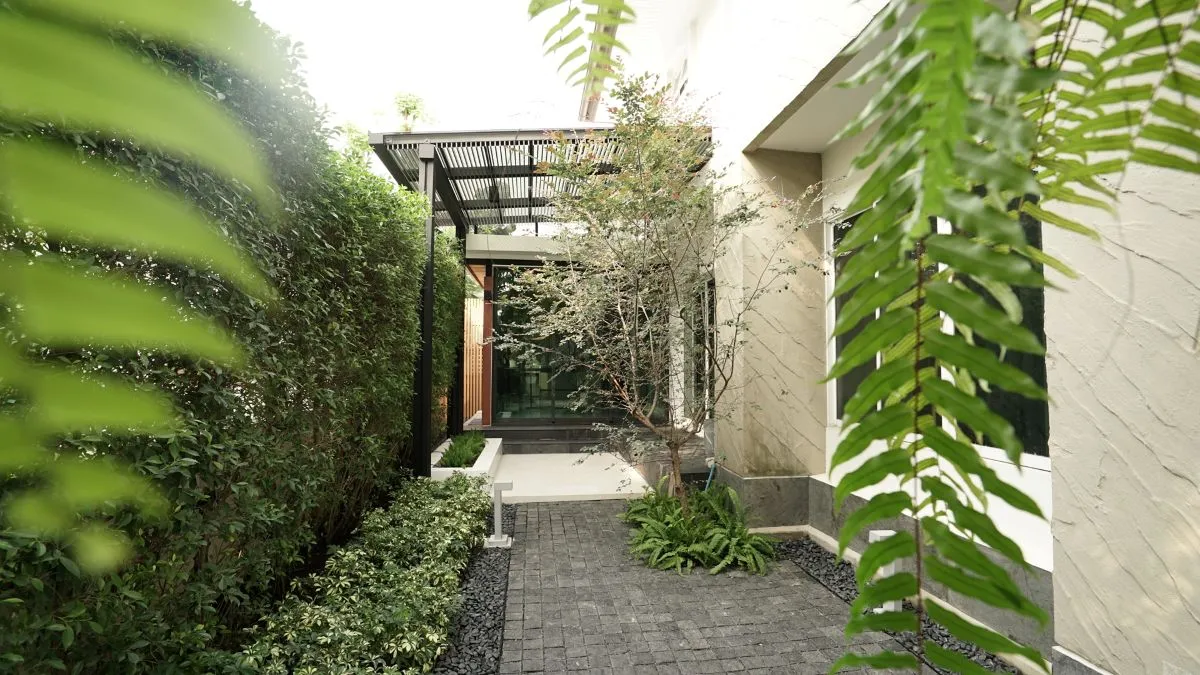
Key takeaways
For a side garden roof to work well in the long term, you need to consider both “light for the plants” and “comfort for people”: choose a material with a level of light transmission that suits the type of plant, adjust it to the actual sun direction and shadow of the house, and design the structure, gutters and ventilation correctly from the start. With function, design and real use all planned, the side garden will not just look good but become a comfortable, easy-care space with no problems to come back and fix
A side garden is a small space that changes the feel of a home more than you might think. The problem many homes face is that if it is too open, people get hot and it is uncomfortable to use, but if the roof is too solid, the plants lack light, the leaves stretch, the colour fades or growth slows. So a good side garden roof is not just about keeping off sun and rain; it has to balance “comfort for people” with “the right light for plants”
For anyone planning to add green space to the home, wanting people to be comfortable while the plants grow fully, we will go from the benefits of a side garden and the principles of designing a roof with light that suits plants to how to choose Shinkolite sheets to suit the type of plant, the sun direction and the shadow of the house, so the side garden works in the long term
Benefits of a side garden
Most people see the space beside the house as useless. Some use it for storage, some leave it empty. If you turn this space into a small garden, besides putting it to use, it brings many benefits for the residents
Turns a narrow side space into a corner you actually use
The space beside the house is usually narrow, used only as a walkway or left empty. Made into a small garden, it can become a relaxation corner, a coffee corner or a place to sit among nature, without needing much space
Adds shade and softens the hardness of the space around the house
A house with a lot of concrete walls or floors can look hard and hot. Adding plants and green space softens the overall atmosphere and creates balance between the built area and nature
Improves quality of life without needing much space
A side garden does not need to be big, but it needs good design to become a place to rest the eyes, catch the breeze or grow easy-care plants, especially with a properly installed side garden roof. The garden can then be used on very sunny or rainy days, whether for relaxing, reading or small family activities
Principles for a side garden roof that gives plants the right light
A properly designed side garden roof should consider both the comfort of the residents and the light needs of the plants, with 3 key principles as follows
Do not think only about sun protection; think about the amount of light
Each plant needs a different amount of light. Some need strong sun for several hours a day, while others like dappled light. So when choosing side garden roofing, look at how much it filters light, so the plants still receive the right amount
Look at both the light transmission percentage and the sun direction of the house
Choosing roofing should consider 2 key factors: the light transmission percentage of the roof sheet and the sun direction of the side garden
For example, a west-facing garden gets strong afternoon sun and may need a sheet that filters more light and reduces more heat, while an east-facing garden can use a clearer sheet to get enough light
Consider the shadow of the house itself
A side garden is usually already shaded by the building, so not much natural light comes in. If the roof sheet is too opaque, the plants may not get enough light. So the design of a side garden roof should look at the house structure, light direction and type of plant together

How to choose a Shinkolite roof to suit the type of plant
Once you understand the principles of light, the next step is choosing the right roofing. One popular material for side garden roofs isShinkolite roofs which comes in several models with different light levels
Several models are popular for side garden roofs, such as
- Nature : A fairly high-transparency model, suited to areas that need quite a lot of natural light, such as a kitchen garden corner or flowering plants
- Heat Cut : A model that reduces heat and filters some light, with light transmission of about 14-29% depending on colour, suited to areas that need a balance between light and comfort
- Prime : A model that filters more light and reduces more heat, suited to areas with strong sun, such as a west-facing garden
Matching plant types to light levels
When choosing a roof sheet for a side garden, always consider the type of plant, so the roof gives the plants the right light
- Plants that like full sun: These need direct sun for several hours a day, such as kitchen vegetables, roses, cacti or outdoor flowering plants, so choose a sheet that lets more light through, such as Nature in a light colour, or the Heat Cut colour with the highest light transmission if the garden gets strong sun
- Plants that like dappled light: Such as monstera, philodendron, ferns or indoor foliage plants. Choose a side garden roof that filters some light, such as a mid-level Heat Cut colour, so the plants get the right light without sun that is too strong
- Plants that dislike strong sun: Such as some orchid varieties or shade-loving foliage plants. Use a sheet that filters more light, such as dark Heat Cut or Prime, and consider adding timber battens or shade netting (Shading Net) under the roof to filter light further
Tips for a side garden roof that works in practice
Besides making the roof suit the plants, another thing not to overlook is real everyday use, because a good roof must not only give the right light but be comfortable, easy to look after and trouble-free in the long term. These tips make that easy
- Do not use opaque sheet as the main roof over the whole planting area, as the light may not be enough
- If unsure, choose a sheet that lets slightly more light through, then use shade netting or battens to filter more
- Check the light transmission percentage of each colour before ordering the material
- Plan the structure, gutters and drainage together, to prevent leaks in future
A good side garden roof must make the space comfortable for people and still support plant growth. The key is choosing roofing that gives light suited to the type of plant and in line with the sun direction of the house. Planned from the start, whether the light transmission percentage of the sheet, the position of the plants or the structural design, the side garden becomes a green space that is usable and beautiful in the long term
If you are planning a side garden roof, or want a translucent roof that makes both the house and the garden comfortable to use, and want specialists to help design it and assess the actual site Shinkolite roof installation service by ROOVTECT is ready to advise on the sheet model, colour and light level that suit your home and type of plants, for a roof that is beautiful, airy and the best value
For more details or advice on our Shinkolite roof installation service, call 02-096-3464 and LINE OA: @roovtect and book a visit to see the real materials atour showroomtoday
References
HEAT CUT SERIES. Retrieved 31 March 2026 from shinkolite.co.th
Frequently asked questions about side garden roofs (FAQs)
Q: What slope should a side garden roof have to drain well?
A: Generally it should slope at least 5-10 degrees, so rainwater runs into the gutter well, reducing the chance of standing water and leaks
Q: Does the height of the roof affect the temperature beneath it?
A: It has a direct effect. A higher roof ventilates better, so the space beneath is not too hot and stuffy and can be used for other activities
Q: Should ventilation gaps be left under the roof?
A: There should be vents or some openings to help air circulate, reducing heat build-up and damp in the garden
Q: Can lighting be installed under a side garden roof?
A: Yes, and the wiring should be planned from the start, so it is convenient to use and does not need reworking later
Q: How often does a side garden roof need maintenance?
A: Check it 1-2 times a year, such as cleaning the roof sheets and gutters and checking the joints, to extend its life