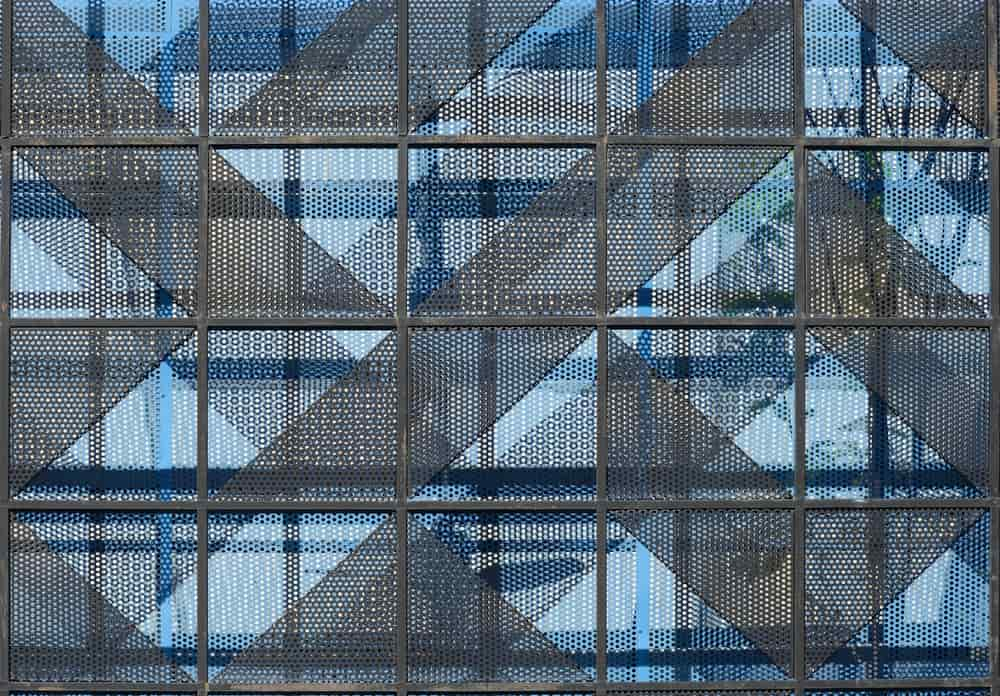
Look at buildings or shophouses today and you will often seeexterior building decoration, whether louvres or awnings, which besides adding beauty and charm to the building also block the sun and add privacy. These are part of what is called a “facade”, which plays an important role in building design
What is a facade?
Facade (Façade) in architecture meansthe visible exterior of a building, especially the front or main side, which some call the “building envelope”. A facade is therefore not just one part or an ordinary wall, but the design of the whole building exterior, which besides beauty has functions that help with ventilation and protection from the heat of the sun
So a facade is not only a “mask” that decorates a building and makes it memorable; it also protects the building from the environment: sun, heat and rain. Architects design facades to be beautiful, create identity and give the building character so it is remembered, and at the same time to keep direct sunlight off the building and let air flow through, helping ventilation and reducing heat inside

Designing building facades to block heat from the sun
Thailand has a hot, humid climate with sun all year, so facade design must consider the heat entering the building. The key design principles are as follows
Build awnings or eaves wider or longer than the building
Awnings or eaves projecting from the building shade the walls and windows and keep direct sunlight off the building, effectively reducing the heat entering it. Choosing awning roofing with heat-blocking properties lowers the temperature coming in even further. It also stops rain blowing directly into the building, reducing damp and helping the house structure stay strong
Install vertical and horizontal louvres
Louvres are popular in facade design. Besides looking good, they filter light and reduce the heat entering homes and buildings
Louvres today are usually installed vertically or horizontally.Vertical louvres are usually fitted on the west and east sides of the house, because the sun does not strike from very high up, whilehorizontal louvres are usually fitted on the north and south sides to block light coming directly from above
Add vents to the facade
Vents or openings in the facade let air circulate naturally, reducing heat build-up inside the building and saving energy by cutting air-conditioning use. They also create an open, airy feel and a better connection with the outside
Homeowners and building owners who want good airflow through the house can consult an architect to study wind direction and design the facade vents for better circulation
Choose materials that are open, heat-blocking and well ventilated
Choose facade materials that are open, block heat and ventilate well. We recommend timber louvres, or for more durability, natural wood-tone steel louvres, or acrylic sheets that block heat and reflect UV effectively
Choose innovations that block heat and look good
There are now new innovations that block heat effectively, for example acrylic louvres from Shinkolite Fin & Shade and Shinkolite Link Facade which block up to 99% of UV and reduce heat by up to 8°C, or louvre materials with colour technology that imitates natural wood grain Aron Facade
If you are interested ininstalling a facade on a building or shophouse, you can contact ROOVTECT, which offers Facade installation by professional architects and engineers, with a 5-year structural warranty and a 2-year component warranty. For more information Call 02-096-3464 or LINE OA: @roovtect
References
- The role of a facade in architecture. Retrieved 16 July 2024 from https://www.re-thinkingthefuture.com/rtf-fresh-perspectives/a2869-the-role-of-a-facade-in-architecture/