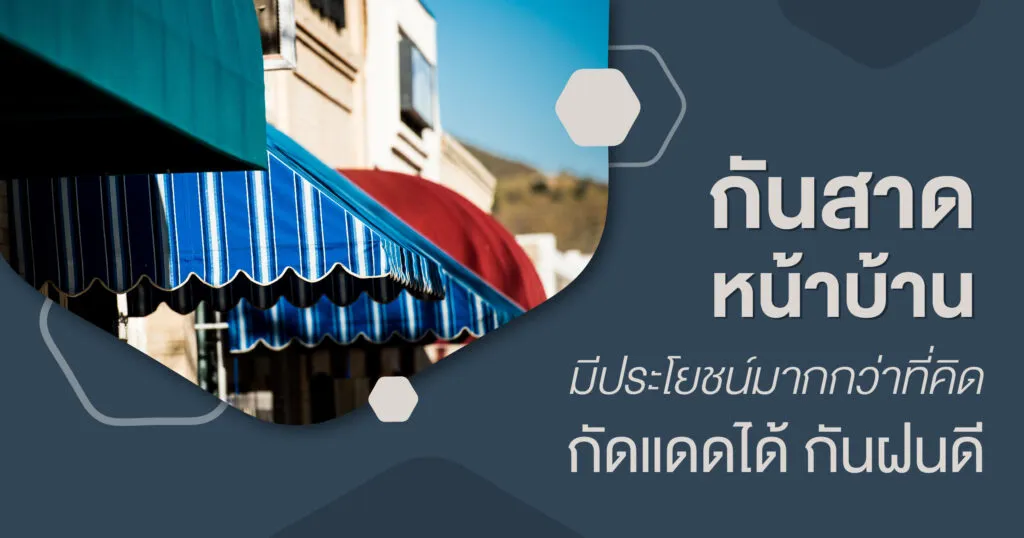
An awning is a generally popular extension because it brings several benefits. It not only adds usable space around the house but blocks hot sun and keeps rain from blowing in. There are many front awning designs to choose from to suit your needs. So here is our guide to preparing before adding an awning roof, and the strengths of each material, to help you decide which sun-shading roof suits the front of your house

Translucent awning roof with louvres under the roof, by ROOVTECT
What are the benefits of a front awning roof?
A front awning is very useful. It not only keeps off sun and rain but has other benefits too. It adds more space for activities at home, such as a place to sit and relax or a garden. A front awning also helps stop buildings and equipment deteriorating, so they last longer, by blocking sun and rain effectively. On top of that, it adds beauty to your home and reflects the taste and style of the residents well

Shinkolite awning roof by ROOVTECT
What should you know before installing a front awning?
Before installing and choosing a sun-shading roof for the front of the house, so the awning turns out safe and correct, homeowners should prepare by following these guidelines
1. Define the purpose of the installation
Before installing, the first step is to see what you want the front awning for, such as sun protection, rain protection, wind protection, privacy or a specific purpose such as a carport roof or kitchen roof, so you can choose the most suitable design and material
2. Research the materials
Next, look into which material suits awning, roof or canvas work. For example, if you want an attractive shopfront, you might choose a canvas awning in a colour of your choice or with a logo, to add to the look of the place. If you want a strong, clean carport roof, choose a durable material such as vinyl or metal sheet. If you want natural light, you can choose a translucent material such as polycarbonate or Shinkolite
3. Budget
Front awnings come in many designs and prices. Besides how it will be used, remember the budget you have. You can find awning prices on the internet, at awning shops near you or from people you know, then compare price, material quality and installation to find the most reasonable installer
4. Look at reviews of past installations
Once you have a shop with the right material and price, check the work it has installed and look for more reviews from real customers, to compare quality and ability before deciding
5. Get in touch
Ask the sales staff for details, or contact the shop to see how it works, and use that information in deciding on your front awning
6. Product warranty and after-sales service
Finally, ask in detail about the product warranty and after-sales service, as a safeguard and for peace of mind over long-term use

Grey vinyl awning roof with ROOVTECT structure
7 front awning roof materials worth knowing
Awnings are made from many types of material. For a front awning that is good value and meets your needs, you need to choose the right one. Each type has different pros and limits, as follows
1. Metal sheet
Metal sheet is made from steel sheet coated with aluminium and zinc, then roll-formed into profiled sheets. It suits both indoor and outdoor use and is mostly used as roof sheet, because it is quick and easy to install. Several grades are available to suit your budget
Advantages:
- Strong and durable
- Hard to leak
- Widely available
- Lightweight
- Easy to install
Limits:
- When it rains, rain hitting the metal sheet makes a loud noise that can disturb the residents
2. Vinyl
Vinyl is one of the most popular materials for awning roofs. It is made from uPVC, a type of plastic that is strong, durable and resists chemicals well. It comes in several forms, such as flat, single-wave and double-wave, and is easy to install with tongue-and-groove joints, so there are no leak problems
Pros :
- Convenient to install
- Heat protection
- Absorbs sound well
- Easy to clean
Limits:
- Expensive
- Heavy
- The colour may change with long use
3. Corrugated fibre-cement tiles
Corrugated tiles are made from fibre cement, a material that is safe to use because it contains no asbestos, which is a health hazard. They are often used for front awning roofs because they drain rainwater well, reduce noise and reduce the heat entering the house
Pros :
- Inexpensive
- Resistant to sun and rain
- Long-lasting
- Goes well with the shape of the house roof
Limits:
- Heavy
- Structural costs are fairly high
- Does not look modern
4. Acrylic Shinkolite
Acrylic is a material used to make front awning sheets. It is strong and durable, and acrylic roof sheet can be chosen in the thickness you want. It suits modern-style homes because it is translucent and can be seen through, and it also blocks heat well
To make this type of material work even better, SCG Chemicals and Mitsubishi Chemical of Japan worked together to develop a new material, under the name Shinkolite It is an acrylic sheet made by a special process, with a surface that is even throughout and seamless, which solves standing water and leaks from joints in front awning roofs
Pros :
- Strong and durable
- Good heat resistance
- If damaged, it does not shatter dangerously like glass
Limits:
- More expensive than other translucent materials
- No opaque version
- Must be installed by a specialist team only
5. Fibreglass
Fibreglass is a material made from glass fibres, formed by mixing silica sand, limestone, boric acid and other ingredients, then melting them at high temperature. Its standout quality is that it diffuses light on the roof very well, suiting modern-style awning roofs
Pros :
- Blocks heat
- UV Protection
- Resists damp
- Absorbs sound
- Algae and black stains form less easily
Limits:
- More expensive than other materials
6. Hollow polycarbonate
Hollow or multiwall polycarbonate has a gap in the middle, similar to corrugated plastic board. It is made from plastic pellets mixed with a flexibility additive and is smooth on both sides. Several types are available; those popular in general construction are
Pros :
- Inexpensive
- Many colours to choose from
- Lightweight
- Easy to install
Limits:
- Expands when heated
- Shows dirt easily because it is a translucent sheet
- Short life compared with other materials
7. Solid polycarbonate sheet
Solid polycarbonate sheet is a single solid piece throughout, similar to glass but tougher and more durable. Outside roof construction, you see it as the protective shields of soldiers or police
Pros
- Tough, strong and safe, with good impact resistance
- Long life, mostly guaranteed for up to 10 years
- A flat, solid translucent sheet similar to glass, but much cheaper
- Lightweight
Cons
- High price compared with hollow sheet
- Shows dirt from dust and water marks easily because it is a translucent sheet
- Scratches easily
- The sheet bows and ripples when heated during the day
How much does an awning installation service cost?
For anyone interested in extending their home who wants to know how much a front awning costs, the answer is that it depends on the properties, the material used, the type of installation, the brand and the expertise of the team. For an exact price, it is best to contact a standard-compliantawning installationservice to explain your needs and ask for a quotation
Every space around the house can become multi-purpose usable space. If you want to add usable space and protect your home from sun and rain with an awning that is beautifully designed, suits the house and serves you for the long term, choose ROOVTECT, producer and designer of awning roofs in international-standard materials, whether Shinkolite, vinyl roofing or solid polycarbonate roofing, installed Knockdown-style with a distinctive design that suits the house and every step handled by professional architects and engineers. Interested in any type of roof or awning extension? For advice and consultation, call 02-096-3464 or LINE Official Account: @roovtect