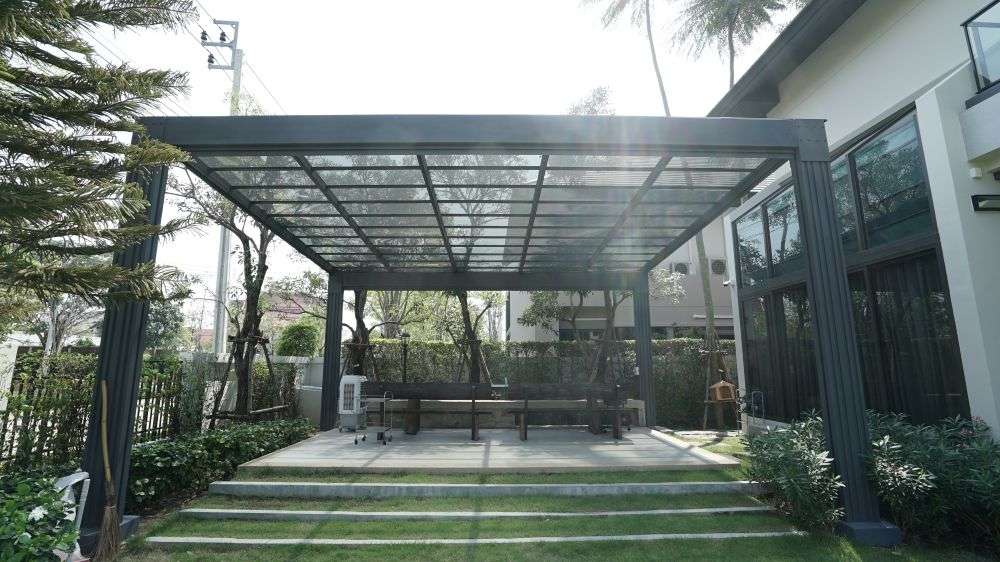
Translucent roofs are popular in construction, especially for carport roofs or areas that want light from outside without losing privacy. They make the space inside look brighter and more open without relying on electric light during the day, and filter UV well. They suit many areas, whether a home that needs a rain roof or a space that needs full sun protection
What is a translucent roof, and what spaces suit it?
A translucent roof is made from a material that lets outside light through, so the space under it is not dark as under an ordinary roof. People used to worry about heat or sunlight coming in and raising the temperature under the roof, but there are now translucent roofs that filter up to 99% of UV, protecting residents from sun and heat that affect health
Areas where translucent roofs are often used
- Carports A translucent polycarbonate or acrylic roof can be installed to protect the car from rain and sun without making the space under the roof dark
- Balconies or gardens Ideal for blocking sun and rain while still letting natural light in
- Areas of the house that want natural light such as a living room that wants light from outside or a storeroom that needs good ventilation
- Side gardens where natural light needs to reach the plants around
What types of translucent roof are there?
There are many types of translucent roofing today, each with pros and limitations to consider, as follows
1. Solid polycarbonate roofs
Solid polycarbonate roofing is a highly durable translucent material that withstands impact well, making it suitable for carport roofs or areas that need protection from harsh weather such as strong sun or heavy rain
Benefits of solid polycarbonate roofs
- Withstands impact and changeable weather
- Filters up to 99% of UV
- Lightweight and easy to install, reducing the load on the structure
- Long service life, with a 10-year manufacturer's warranty
Cautions for solid polycarbonate roofs
- Quite expensive compared with other materials
2. Twin-wall polycarbonate roofs
A polycarbonate roof with channels inside. It can be curved, filters light and reduces heat by up to 99%. Suits areas that need ventilation, such as carports
Benefits of twin-wall polycarbonate roofs
- Easy to install on many kinds of structure, including steel, stainless steel and timber
- Absorbs sound well and reduces rain noise
- Lightweight, reducing the load on the structure
- Filters up to 99% of UV rays
Cautions for twin-wall polycarbonate roofs
The channels inside may collect condensation and moss after long use
3. Shinkolite translucent acrylic roofs
Acrylic sheet is a clear plastic similar to glass but lighter and more impact-resistant. It filters UV and gives soft light, suiting areas that want natural light to reach the space below
Benefits of Shinkolite translucent acrylic roofs
- Filters UV well, up to 99%
- Good impact resistance, clear and more durable than glass
- Some sheet models block infrared (IR), reducing heat transmission
- Easy to install and lightweight
- Attractive, giving the house a modern look
- Long service life, with a 10-year manufacturer's quality warranty
Cautions for translucent acrylic roofs
- May scratch, turn cloudy or break easily after some time in use
4. Fibreglass roofs
Fibreglass is a roof sheet made from resin and glass fibres, making it strong and lightweight. It filters light and is inexpensive, suiting those on a limited budget
Benefits of fibreglass roofs
- Lightweight and easy to install, suiting many types of structure
- Filters UV and heat well, with a special film coating that stops the material deteriorating quickly
- Diffuses natural light, making it soft
- Can be curved to the shape you need
Cautions for fibreglass roofs
- Shorter service life than other products
- Sheets may turn cloudy and break easily after long use
- Noisy in rain
5. Glass roofs
A material made from clear glass that adds natural light and makes a building look open and airy. Strength has now been improved with the development of stronger tempered glass
Benefits of glass roofs
- Gives full light
- Adds beauty to the space
Cautions for glass roofs
- Higher price
- Quite brittle, and breaks into dangerous sharp edges, except safety glass, which breaks into granules
- Heavy, needing a strong supporting structure
6. uPVC roofs
uPVC (Unplasticized Poly Vinyl Chloride) resists chemicals and changeable weather well. Suits use in damp areas or where it rains often
Benefits of uPVC roofs
- Lightweight and easy to install
- Does not retain heat, saving electricity
- Absorbs sound well, reducing rain noise
Cautions for uPVC roofs
- Quite expensive
- Needs experienced, highly skilled installers

Comparison table of translucent roof types
| Roof type | Pros | Cautions |
| Solid polycarbonate | Lightweight, impact-resistant | Quite expensive, scratches easily |
| Twin-wall polycarbonate | Easy to install, lightweight, inexpensive | May collect condensation and moss inside |
| Acrylic | Filters UV well, highly durable, with additives that reduce heat under the roof | Scratches easily, quite expensive |
| Fibreglass | Inexpensive, lightweight | Short service life |
| Glass | Gives full light, adds beauty | Expensive, brittle and breaks easily, heavy |
| uPVC | Resists chemicals and weather | Expensive, needs skilled installers |
If you are looking for a provider of Translucent acrylic roof installation or Shinkolite roofs, or other roof types ROOVTECT is ready with professional architects and engineers who can design and install a carport roof or polycarbonate awning roof to suit your every use. 5-year structural warranty, 2-year warranty on awning components (covering leaks and structural paint), and a manufacturer's roofing material warranty of up to 10 years
For more information or a consultation, call 02-096-3464 or LINE: @roovtect
References
- The pros and cons of each type of roof laid out. Retrieved 29 May 2025 from https://www.wazzadu.com/article/4608