Key takeaways
Choosing a roof for a Thai kitchen extension at the back of the house means giving weight to both heat control and light management. Opaque materials such as vinyl or insulated metal sheet block the sun and lower the overall temperature well, but should be designed together with translucent roofing at specific points to bring in natural light that kills germs and reduces damp. Good planning must also consider a material weight that suits the foundation system and a suitable ventilation system, for a kitchen that is airy, easy to clean and practical, with no worries about structural settlement or leaks in the long term
A Thai kitchen separate from the main house is the dream of anyone who loves cooking, because Thai food involves pounding, chopping and stir-frying, and comes with strong smells and smoke. But the challenge in aKitchen designthat gives many people the biggest headache and worry is that the new extension will be as stifling as an oven, or so dark that nobody wants to use it
Choosing roofing for a Thai kitchen extension is therefore not just about looks but about planning function to deal with the nature of a Thai kitchen, which faces heat, grease and damp all the time. Planned wrongly from the start, a kitchen that should be a happy space may become a stuffy corner nobody wants to walk into
5 things to consider before choosing a kitchen extension roof
In deciding which roof a kitchen should have, the key is not looks but seeing through to cooking habits and the limits of the space. There are 5 key checklist items to consider:
1. Good heat protection
A Thai kitchen has to cope with heat from the sun radiating down from the roof and heat from the hob rising upwards. The roofing must therefore not hold heat, or must have thick enough insulation, so the kitchen does not become an oven
2. Natural light openings
A back extension is usually a narrow, enclosed corner. With an entirely opaque roof, the kitchen is dark, which leads to damp building up and a breeding ground for germs and cockroaches. PlacingTranslucent Roofsat specific points helps kill germs and makes the kitchen look more open
3. Easy to clean
Smoke and oil vapour from cooking tend to rise and settle on the underside of the roof or the ceiling. The material chosen for a kitchen extension roof should therefore have a smooth surface that does not hold dust and can easily be wiped clean of soot with a damp cloth
4. High, airy and good at clearing smoke
The roofing affects the pitch and height of the room. If the roof is too low, smoke and smells clear slowly and the cook feels uncomfortable. Consider materials that allow installation at a suitable height, along with a cooker hood or extractor fan
5. Material weight that suits the structure
If the existing area is not piled as deep as the house, akitchen extension planshould avoid heavy roofing such as corrugated fibre-cement tiles or a concrete roof, and use lightweight materials such as metal sheet orVinylinstead, to slow settlement and reduce structural tearing in future
A closer look at popular roofing materials for Thai kitchen extensions
To make it easier to decide which roof suits your kitchen extension site best, we have summarised the pros and limits of all 4 popular materials, as follows
1. Metal sheet roof with insulation
A popular choice for kitchen extensions focused on value and fast construction
- Strengths: strong, with excellent sun and rain protection. Very lightweight, so the steel structure need not be oversized, which helps the overall back kitchen extension budget. Low pitch, very suitable for townhomes with limited height
- To consider: bare metal sheet absorbs heat and is very noisy in rain. Choose a grade with thick insulation (PU or PE Foam) to reduce impact noise and heat build-up, and a ceiling usually needs to be added under the roof for a tidier look
2. Opaque vinyl (uPVC) roof
A material that feels cool and looks clean as soon as it is installed
- Strengths: insulating in itself and the best of the opaque materials at absorbing rain noise. The underside is smooth and attractive thanks to concealed-joint installation, like a built-in timber ceiling. Soot wipes off easily. Suited to kitchens designed to connect with a dining corner or semi-outdoor laundry area
- To consider: it is 100% opaque, so plan enough light fittings, or design extra light openings in the walls, so the kitchen does not feel cramped and too dark
3. Corrugated fibre-cement tile roof
A traditional material focused on durability and harmony with the architecture of the existing house
- Strengths: blends with the main house roof, very durable and weather-resistant, not as noisy in rain as metal sheet, and releases heat well to standard
- To consider: it is heavy, so the steel roof structure and foundation piling must be calculated precisely, to prevent settlement that pulls the joint so the extension separates from the main house
4. Translucent roof
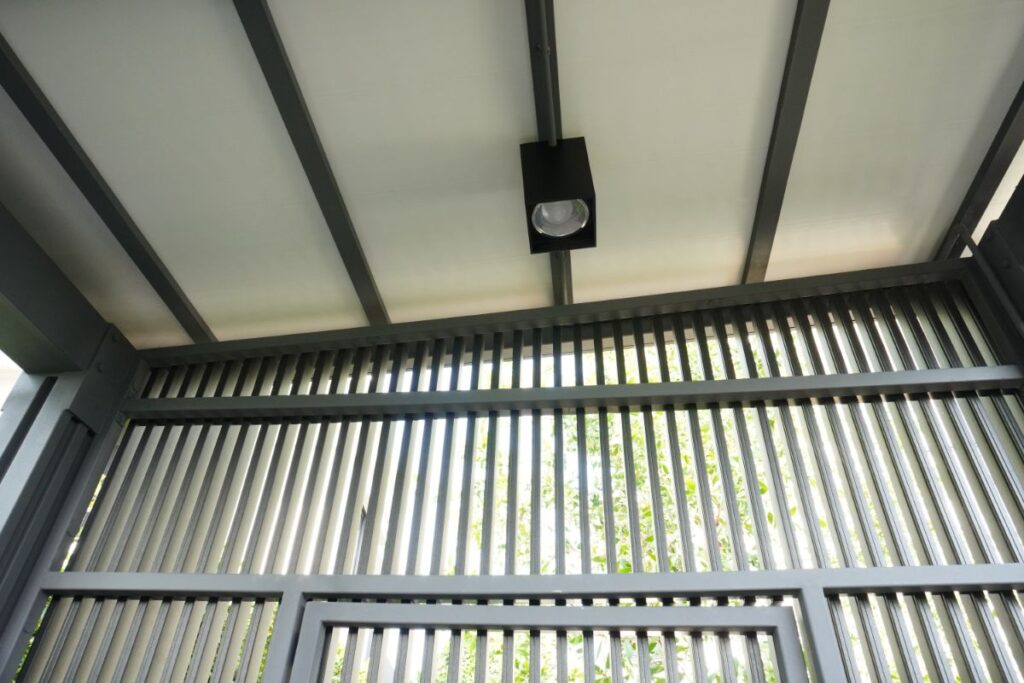
An innovation using premium acrylic sheet such as Shinkolite orSolid polycarbonate to bring natural light into the kitchen
- Strengths: excellent for fixing a dark, damp kitchen. Suited to light openings at specific points, so light shines down to kill germs at the sink or food preparation area. Makes the kitchen bright and airy while still blocking heat
- To consider: not recommended as the main material over 100% of the area, because too much light comes down and causes glare while cooking, and grease may build up on the surface and look unattractive. Use it alternating with opaque material, in the right proportion, only where natural light is wanted
Key factors that affect the price of a back kitchen extension
Budgeting for a kitchen extension is not just the cost of the kitchen roof sheets. There are other elements to cost in full, for a job that is finished, strong and does not need the builder back for repairs
- Foundations and piles: a cost never to save on or cut, because standard-compliant foundations and piles are the start of a strong kitchen, reducing the risk of cracks and preventing settlement and tilting that pulls on the existing house structure
- Ventilation: a Thai kitchen needs excellent air circulation. A high-powered extractor fan, or battened timber walls to help clear smells and smoke, is needed, and affects the extension budget
- Quality of structural materials: a kitchen is very humid. A stainless steel structure, or a galvanised steel structure with premium paint, reduces the risk of rust and long-term maintenance better than ordinary steel
If you are looking for a professional to work out which roof suits a kitchen extension in your home best, ROOVTECT offersback kitchen extensions at friendly priceswith superior engineering standards
- Smart Kitchen Design: Thai kitchens designed to clear heat and smells systematically, taking wind direction and natural light into account
- Durable Materials: premium-grade roofing, both vinyl and heat-blocking Shinkolite sheet, so the kitchen stays cool all day
- Professional Engineering: installed with the Smart Joint system, which reduces settlement and vibration, with smooth, professional modern-style finishing
For more details, advice or a quotation for a back kitchen extension, or other extension services, call 02-096-3464 and LINE OA: @roovtect and book a time to talk with our specialists atour showroomtoday
References
- 10 things to know about kitchen design and renovation. Retrieved 6 May 2026 from https://www.baanlaesuan.com/216557/home-maintenance/kitchen/kitchen-renovation-2/
Frequently asked questions about choosing a roof for a Thai kitchen extension (FAQs)
| Question | Answer |
|---|---|
| How high should a Thai kitchen roof be? | The height from floor to ceiling should be no less than 2.5-2.8 metres, for enough air volume, because hot air rises. If the roof is too low, heat radiates down to the cook easily |
| Will cooking grease stick to the underside of the roof? | It certainly can, especially in kitchens with a ceiling or a smooth vinyl underside. Design in an extraction system or a vent at the highest point, to draw grease and smoke outside as fast as possible |
| Does a back kitchen extension need a setback? | Under the Building Control Act, a solid-wall extension must be at least 50 centimetres from the land boundary and have the neighbour's written consent. Without consent, the setback is 2 metres |
| Is a turbine ventilator on a kitchen roof a good idea? | A turbine ventilator releases heat under the roof well, but for a smoky Thai kitchen we recommend an industrial extractor fan, or designing windows and battens so air blows through, which gives clearer results |
| Why do most kitchens leak at the wall joint? | Because the extension and the main house settle at different rates. If the builder welds the kitchen structure onto the existing house wall, when the kitchen settles it pulls the joint apart and water leaks in. A correct extension must therefore keep the structures completely separate |